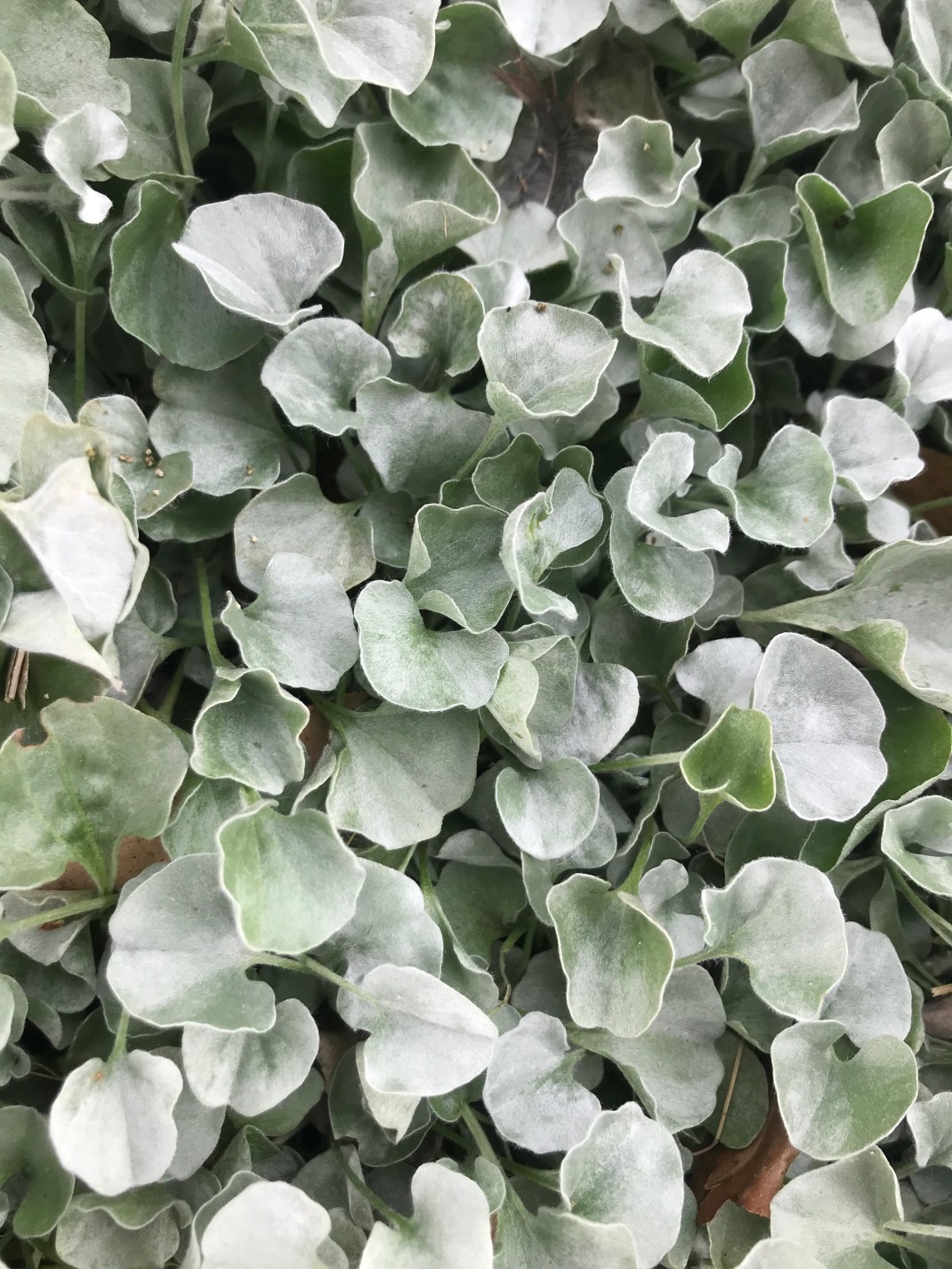
Oliver Lees examines the case for an alternative lawn.
This article appeared in issue 155 of Renew Magazine, published in April 2021. I have republished the article here with permission from the publisher.
Like all facets of Australian life, our urban environments have undergone considerable change in keeping up with the demands of an increasingly sustainable and contemporary society. Once considered an eyesore, solar panels are now widely accepted as an ethical energy alternative, with more than two million residential setups on rooftops across the country. Likewise people have reconsidered how they manage their waste: nearly all Australians recycle, whilst roughly a third of the population have developed at-home composting. The modern home has undergone a revolution of its own, with homeowners opting for energy efficient light bulbs and water saving shower heads.
But there is one feature of the Australian home that has stood the test of time, remaining a ubiquitous sight across the country—the common grass lawn.
Grass is a mainstay of Australian gardens, and is the default option in both front and back yards. It certainly has its virtues: as well as being familiar and relatively manageable, a well-kept grass lawn looks great. As many have gravitated closer toward cities—and therefore forfeited their ability to own a larger chunk of land—these green spaces are perhaps valued more now than ever before.
But what if there was a way to get even more out of your limited garden space? What if, instead of a yard that was purely green in aesthetic, you had an area that could be cultivated into an area of actual abundance?
Is there a problem with grass?
Maria Ignatieva, a professor of landscape architecture at the University of Western Australia, has done extensive research into the historical proliferation of lawns dating back to the Middle Ages, and is currently researching lawns as an ecological and cultural phenomenon in Perth. Professor Ingatieva’s research has found that these spaces became a symbol of upper-class European society, demonstrating an element of prestige and power. The popularity of lawnscapes took off in the early 18th century, as Lancelot ‘Capability’ Brown redefined the English landscape, styling gardens with dazzlingly well-kept lawns. In private homes as well as public spaces, a neat stretch of grass allowed humanity to demonstrate its ability to tame nature in a controlled manner.
Australia’s culture of lawn cultivation is an heirloom of our colonial history, just as it is in New Zealand and the United States. But lawns were also highly symbolic in the early days of settler society in Australia, as newly arrived colonists attempted to achieve the classic English garden in the less forgiving climate of the Australian outback. Like other popular elements of imperial style, a grass lawn was considered in opposition to the uncivilised wildness; a means of differentiating oneself from the harsh native scrub which represented indigeneity. It’s not just the aesthetic that’s been imported either, the most commonly used grasses in Australian backyards, buffalo, kikuyu and couch grass, were all introduced from other parts of the world. Whilst each type of grass is unique in their blade structure and suitable environments, they’re the same in that each of them create that classic green carpet look many people crave.
Clearly, introduced plants are a problem in a fragile ecosystem like that of Australia—but the fact that so many lawn grasses are introduced isn’t the only reason to consider alternatives. From an ecological perspective, grass lawns can stunt the biodiversity of the soil. Common grasses are considered a monoculture and in some circumstances can actively detract from the productivity of the garden. With its wiry blades and long underground roots, couch grass is a common suspect that is known to pop up and invade garden beds.
Those with pollen allergies will understand how difficult those hayfever months can be, and landscape gardener Matt Fiddes, owner of Melbourne-based Blume Landscapes, explains that a little-known advantage of getting rid of your lawn is that doing so helps reduce pollen count.
“Because pollen is windborne you can’t really avoid it,” he explains. “But the best thing you can do is try and minimize it around your house, and you can do that by cutting back on your grass space.”
Regular grass also requires regular mowing, which can be time consuming and emit harmful levels of carbon dioxide.
Still, it’s important to remember that grass isn’t inherently bad. Professor Ignatieva emphasises that grass is not somehow inherently evil and in need of immediate eradication. In fact, she says that grass plays an important part in the Australian ecosystem.
“Lawns [have] many positive [effects] One of the most important is their cooling effect and another is for recreation and sport,” she said. “So it is important to find a good compromise that corresponds with local conditions.”
A decade’s experience in landscape gardening has also taught Matt that striking a balance is important.
“Nothing can beat that classic turf look, but lawn alternatives definitely deserve a spot in the landscape,” he says.
Finding an alternative
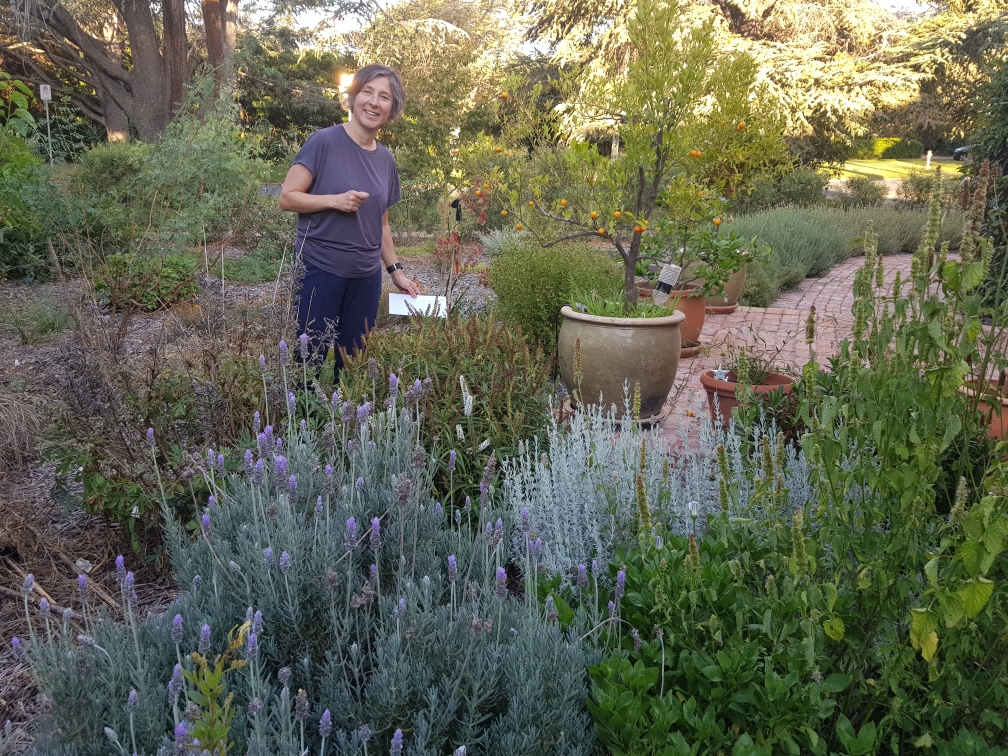
Having spent five years feeling displeased with her front yard, Sarah Reid finally gathered the courage to make some changes. Living in a heritage listed corner plot in her namesake inner-city Canberra suburb of Reid, Sarah said she wanted a more dynamic garden, one that would not only withstand a dry climate, but would also be useful and filled with interest.
“It was pretty sad and depleted,” she said, in reference to the couch grass which used to occupy her front yard.
“I wanted something friendly and biodiverse, with flowers to encourage the bees and other wildlife.”
Working with her husband, Sarah pulled out her cotoneaster hedge and removed the widespread couch grass (which she described as her “bane”) by smothering it with cardboard and fresh soil.
In its place, she planted a variety of native flowers; a neat row of lavender which lines the pathway; and ground cover to stifle the returning weeds, including myoporum and salt bush. She now finds that edibles often sprout spontaneously around her vegetable garden where previously there were weeds.
The greater diversity of plant life in the garden has welcomed wildlife, where previously there was none: lizards scuttling from beneath stones; baby birds coming in to land; and butterflies and bees making use of the many flowers. The transition is now well established; Sarah estimates that the transformation took about 18 months, but says it never felt like too much work.
“Considering how big the change has been, I don’t feel like it has been an enormous amount of effort,” she said.
“I wouldn’t worry about being held back by a lack of experience, it’s all about enjoying the surprise of what unfolds.
“it was just really fun, and I loved seeing the changes.”
Professor Ignatieva says the careful planning of a dynamic garden space like Sarah’s not only makes sure the space is of use—unlike many purely aesthetic grass lawns—but also makes everything healthier.
“Employing different landscape design patterns—colour and texture—as well as providing more biodiversity, [creates a more] ecologically friendly wildlife habitat and a healthier environment.”
Instead of spending her gardening time pulling out weeds and mowing the lawn, Sarah says she spends most of it inspecting the growth of her many projects. But despite her best efforts, the couch grass still pops up from time to time. Determined not to use poisons, Sarah will either pull the persistent strands out by hand to stop them invading her flower beds, or—if weather permits—use a small propane burner.
Can add biodiversity research here if need be.
Street-facing fences are prohibited in Canberra, which has made the change all the more rewarding for Sarah. Often as she’s working in the front garden, her neighbours will walk past and stop for a chat, commenting on all the progress she’s made, adding another way in which she has become more engaged with her environment.
“To me, the whole experience has really demonstrated just how positive being in your front yard can be,” she said.
Searching for a similar solution to her own problem of encroaching kikuyu grass, Catriona—who lives in the Melbourne suburb of Northcote—first tried myoporum as a replacement. Myoporum is a suitable grass replacement because it maintains a low, dense ground cover that will often deter weed growth and grow no more than 30cm tall.
But after a short growth period, the myoporum died off, likely due to a lack of sunlight in winter. Like any garden project, there is an element of trial and error involved in working out what best agrees with the soil. (Sarah went through a similar period of experimentation, trying out different configurations until hitting upon one that worked.)Despite the setback, Catriona remained determined to find another alternative to suit her native 3×3 metre garden plot. And she did, in the form of dichondra.
Matt from Blume Landscapes says in his experience—despite it still not being very popular amongst his clients—dichondra is one of the best options for people looking for something other than grass. He also cites other low-lying alternatives like moss and mint as practical, no-mow alternatives.
“[Dichondra] is super simple [to plant], and then once the plants are established, they take care of themselves,” he said.
Catriona bought everything she needed for her new lawn from a local nursery. She used a combination of seeds and seedlings and completed the whole job herself. Like myoporum, dichondra creates a low ground cover, growing only as tall as 10-15cm, with small kidney shaped leaves. There are two popular options for Australian gardens: repens and emerald falls. Whilst the former is used for general ground cover, the latter can be used on areas like retaining walls, to create a thick cascade effect. Dichondra is also self-repairing, meaning if it’s trampled or flattened for some reason, it’s perky stems will pop back up in a couple of hours. Or, as Matt puts it: “As long as you’re not playing cricket on it, then it’s fine.”
In some respects, dichondra is hardier than grass. It very rarely dies off in patches—a recurring problem with common grass lawns, often due to being overexposed to the sun, or from being cut too short. Another, stinkier nemesis for grass is pet dogs, whose highly nitrogenated urine can simply burn through turf; again, this problem doesn’t affect dichondra.
All in all, it took around a year for the dichondra to properly cover the space, and Catriona couldn’t be happier: “The weeding now takes only five minutes, whereas it used to be an absolute nightmare,” she says. “I’m definitely a massive advocate. I tell everyone I can.”
A movement
The concept of an alternative lawn is, of course, not an entirely new concept. But the reimagining of conventional garden spaces has collected momentum in recent years.
In 1999, Heather Jo Flores founded Food Not Lawns, an online, international collective of people looking to make the most out of their yard through community engagement. Through forums and online courses, community members organise seed swaps and garden parties. The website now has over 80,000 subscribers from around the world, where Heather says “many thousands of people are involved now in our free online courses and learning to turn their lawns into permaculture gardens.
“In general I think that people embrace any opportunity to reconnect with nature, especially if they don’t even have to leave their houses to do it!”
Over 20 years of travelling the United States, helping people with their garden projects, Heather believes anyone is capable of changing their environment for the better, especially when you can find like minded people to help you along the way.
“If you’re competing with a well established patch of grass the best way to get started is to dig it all out, then add your mulches,” she said, before stressing:
“Connect with the neighbors. No lawn is an island.”
A different relationship with your garden
With the bulk of the work behind her, Sarah is glad she finally made the call to uproot her space and try something new a year ago.
Whilst she made repeated mention to the ways in which the garden seemed to work better together—the composted soil birthing edibles and colourful flowers; an in-ground worm farm feeding the raised garden bed—her biggest takeaway was just how useful the space now felt, and how that had changed the way she thought and felt about her garden.
“In the space of a year, it’s gone from just dirt and straw to something with lots of life in it, it’s like there’s more information in there now, much more activity.” she began.
“It’s given me quite a different relationship with the garden.
“It’s like the garden and I have these conversations, and it tells me what new thing is happening in its life.”
 Oliver Lees 李奥力